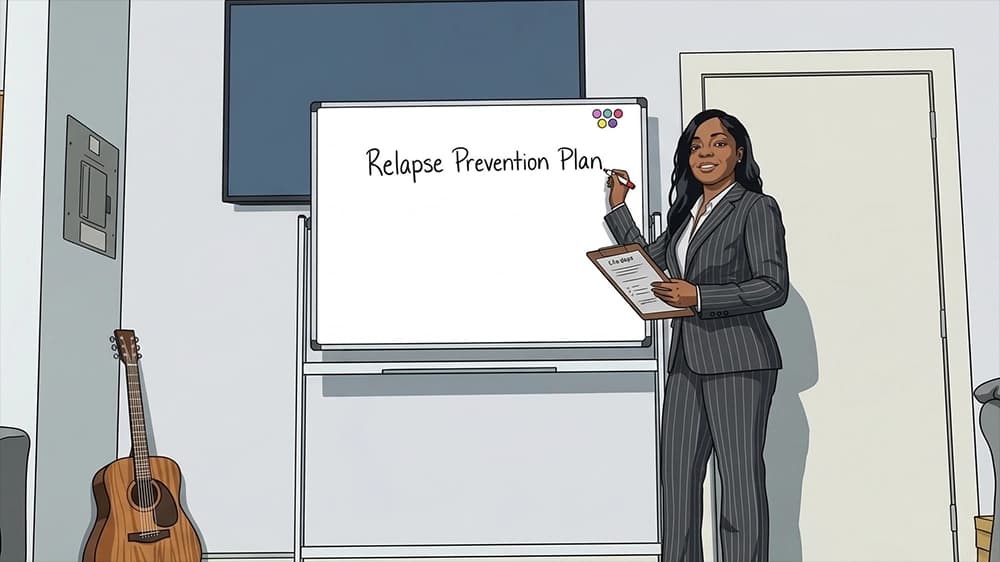
For individuals in West Palm Beach and throughout South Florida who are transitioning from intensive care to everyday life, outpatient treatment provides a structured framework for building the relapse prevention skills that sustain long-term recovery. Rather than simply maintaining sobriety day to day, outpatient programs equip participants with practical strategies for recognizing early warning signs, managing high-risk situations, and responding to cravings without returning to substance use.
What Relapse Prevention Means in Practice
Relapse prevention is a skills-based clinical approach rooted in cognitive-behavioral principles. Developed from decades of addiction research, it operates on a straightforward premise: relapse is not a sudden event but a process that unfolds over time, beginning with emotional and mental shifts well before any substance use occurs.
In outpatient settings, therapists guide participants through identifying their personal relapse patterns—the specific thoughts, emotions, environments, and social dynamics that elevate risk. This individualized mapping turns abstract concepts into concrete, actionable awareness. When someone can name the exact sequence of events that historically preceded their use, they gain the ability to interrupt that sequence early.
Outpatient treatment is particularly effective for relapse prevention because it occurs alongside real life. Unlike residential programs where triggers are largely removed, outpatient rehab requires participants to practice new skills while navigating work, family, and social obligations. Many participants find that working during outpatient rehab is manageable with the right strategies in place. This real-world application strengthens skill transfer and builds genuine confidence in recovery.
Core Skills Taught in Outpatient Programs
Trigger Identification and Management
Every person in recovery has a unique set of triggers—people, places, emotions, or situations that activate cravings or addictive thinking patterns. Outpatient therapy provides structured exercises for cataloging these triggers and developing specific response plans for each one.
Common triggers addressed in South Florida outpatient programs include social environments where substance use is normalized, financial stress, relationship conflict, boredom, and emotional pain. Treatment teaches participants to categorize triggers by controllability: some can be avoided entirely, while others require active coping strategies.
Cognitive Restructuring
Addictive thinking often follows predictable patterns—minimizing consequences, romanticizing past use, or catastrophizing challenges until substance use feels like the only option. Cognitive-behavioral therapy (CBT) techniques taught in outpatient programs help participants identify these thought distortions and replace them with more accurate, recovery-supportive thinking.
This isn't about positive thinking or denial. It's about developing a realistic internal dialogue that acknowledges difficulty without concluding that substance use is an acceptable response.
Urge Surfing and Craving Management
Cravings are a normal part of recovery, not a sign of failure. Outpatient programs in West Palm Beach teach participants to understand cravings as temporary neurological events that peak and subside, typically within 15 to 30 minutes. Techniques like urge surfing—observing cravings without acting on them—build the tolerance and confidence needed to wait them out.
Participants also learn complementary strategies including distraction techniques, physical activity, mindfulness practices, and reaching out to support contacts during peak craving moments.
Building a Recovery-Supportive Lifestyle
Sustainable recovery requires more than avoiding substances. Outpatient treatment helps participants restructure daily routines, rebuild healthy relationships, develop meaningful activities, and address the life circumstances—employment, housing, legal issues—that can undermine recovery when left unaddressed.
Programs often incorporate alcohol addiction treatment components and broader life skills training, recognizing that recovery touches every dimension of a person's life. Understanding how long IOP programs last helps participants plan their schedules and set realistic expectations.
Why Outpatient Treatment Strengthens Prevention Skills
The outpatient model offers distinct advantages for relapse prevention. Because participants return home between sessions, they encounter real triggers and practice real coping in their actual environment. Therapists can then review what worked, what didn't, and refine strategies based on lived experience rather than hypothetical scenarios.
This feedback loop—practice, reflect, adjust—accelerates skill development. For a closer look at the day-to-day experience, read about what to expect in outpatient rehab. Participants in West Palm Beach outpatient programs often report that the combination of structured clinical guidance and real-world application creates deeper, more durable learning than residential treatment alone.
Group therapy sessions add another dimension. Hearing how peers navigate similar challenges, sharing strategies, and experiencing mutual accountability builds a recovery community that extends beyond the treatment setting. These connections often become lasting elements of a person's support network.
The Role of Aftercare Planning
Effective outpatient programs don't simply end—they transition. Before completing treatment, participants work with their clinical team to develop comprehensive aftercare plans that maintain momentum. This typically includes ongoing support group participation, continued therapy at reduced frequency, insurance-verified follow-up appointments, and crisis planning for high-risk periods.
Aftercare planning also addresses the practical factors that influence relapse risk: stable housing, employment support, healthy social connections, and physical health management. In South Florida, community recovery resources complement clinical care and provide additional layers of support.
Five Key Takeaways
-
Relapse is a process, not an event — Warning signs emerge gradually through emotional, mental, and behavioral changes, and outpatient treatment teaches participants to recognize and respond to these early indicators.
-
Trigger awareness is personalized — Effective relapse prevention starts with mapping your unique set of risk factors, then building specific, practiced response plans for each one.
-
Real-world practice builds real confidence — Outpatient treatment's structure allows participants to apply skills in their everyday environment, strengthening genuine coping ability through repeated practice.
-
Cravings are temporary and manageable — Learning to observe and tolerate cravings without acting on them is a trainable skill that becomes easier with practice and clinical support.
-
Recovery requires lifestyle reconstruction — Lasting sobriety depends on building daily routines, relationships, and activities that actively support recovery rather than simply avoiding substances.
Frequently Asked Questions
What relapse prevention techniques are taught in outpatient treatment? Outpatient programs teach cognitive-behavioral strategies including trigger identification, cognitive restructuring, urge surfing, lifestyle modification, and crisis planning. Participants practice these techniques between sessions and refine them with therapist guidance based on real-world outcomes.
How effective is outpatient treatment for preventing relapse? Research supports outpatient treatment as effective for many individuals, particularly those with stable living situations and moderate substance use severity. The real-world practice component strengthens skill transfer, and ongoing clinical contact provides accountability and support during the critical early recovery period.
How long should someone attend outpatient treatment for relapse prevention? Duration varies based on individual needs, but most evidence-based guidelines recommend a minimum of 90 days. Many people benefit from 6 to 12 months of outpatient care, with session frequency gradually decreasing as skills strengthen and stability increases.
Where can I find outpatient relapse prevention programs in West Palm Beach? West Palm Beach offers several outpatient treatment options addressing relapse prevention. Amity Behavioral Health provides structured outpatient programming that integrates evidence-based relapse prevention strategies with personalized treatment planning. Contact us at (888) 833-3228 to discuss program options.
Can relapse prevention skills help if I've relapsed before? Prior relapse does not diminish the value of prevention skills—it often enhances it. Examining previous relapse experiences provides concrete data about personal risk patterns and helps refine strategies. Many individuals find that outpatient treatment after a relapse produces deeper engagement and stronger skill development.
Reputable Resources
- SAMHSA National Helpline: 1-800-662-4357 — Free, confidential referral and information service available 24/7 for substance use and mental health support
- National Institute on Drug Abuse (NIDA): www.nida.nih.gov — Evidence-based information on relapse prevention, treatment approaches, and addiction science
- National Alliance on Mental Illness (NAMI): www.nami.org — Resources for co-occurring mental health conditions that influence relapse risk
Taking the Next Step
If you or someone you care about in South Florida is seeking outpatient treatment that prioritizes practical relapse prevention skills, professional support makes a meaningful difference. Amity Behavioral Health offers structured outpatient programs in West Palm Beach designed to help participants build the awareness, skills, and support networks needed for lasting recovery.
Ready to learn more? Call us at (888) 833-3228 to speak with an admissions specialist about outpatient relapse prevention programming. You can also verify your insurance coverage online to understand your options before getting started.
Recovery is built one skill at a time, and outpatient treatment provides the guidance to develop those skills in the context of your real life.
This article is for informational purposes only and does not constitute medical advice. Always consult with a healthcare provider for personalized treatment recommendations.
Amity BH Clinical Team
Published by Amity Behavioral Health. This article provides general information and is not a substitute for individual professional advice.
Related Programs & Resources
Learn more about our treatment programs and how we can help you recover.
Related Articles
 Treatment
How to Start Addiction Recovery with Self-Help Methods
Only 20% of people with substance use disorders receive professional treatment. Self-help methods provide vital support while working toward or alongside professional care.
Substance Abuse in Adolescence: What Parents Should Know
Children of parents with substance use disorders face up to 8x higher risk of developing addiction. Early intervention and open communication are essential for protecting adolescents.
Addiction Treatment for Professionals: A Guide for High-Achievers
44% of adults use alcohol or drugs to manage stress. High-functioning addicts seek help 5-8 years later than others. Specialized professional treatment addresses unique needs.
Discuss Your Treatment Options
Contact Amity to ask about assessment, program fit, and services at the location you are considering. Confirm current availability before making plans.
Ask about care options, program fit, and next steps.